
Conservation at Hebron
In partnership with Natures Valley Trust (NVT) and CapeNature, Hebron Private Nature Reserve is in the process of being rehabilitated and there are currently numerous conservation programmes in progress to ensure tangible and meaningful results.
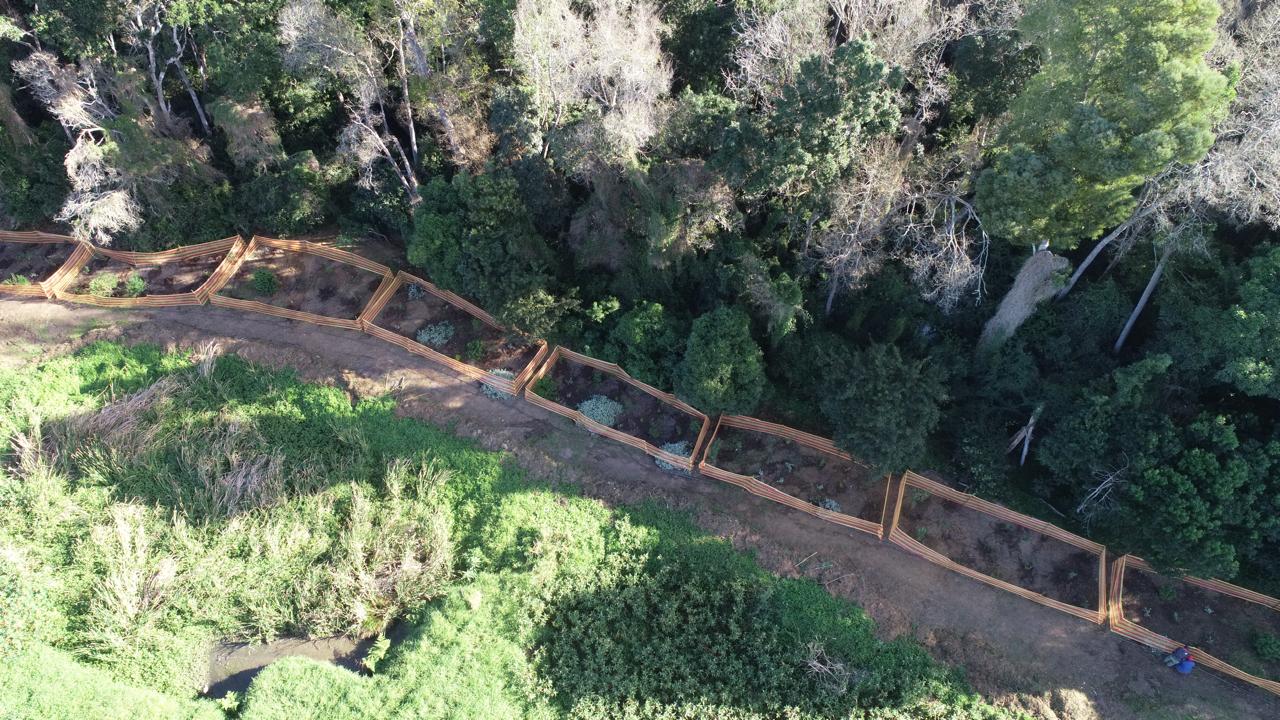
A novel concept: Forest Construction. We are using demarcated plots to enact different rehabilitation treatments, which include the planting of edge specialist tree and shrub species, seed sowing, and mixing Kooigoed (Helichrysum petiolare) with later successional species. Success is monitored over time.
Forest Conservation
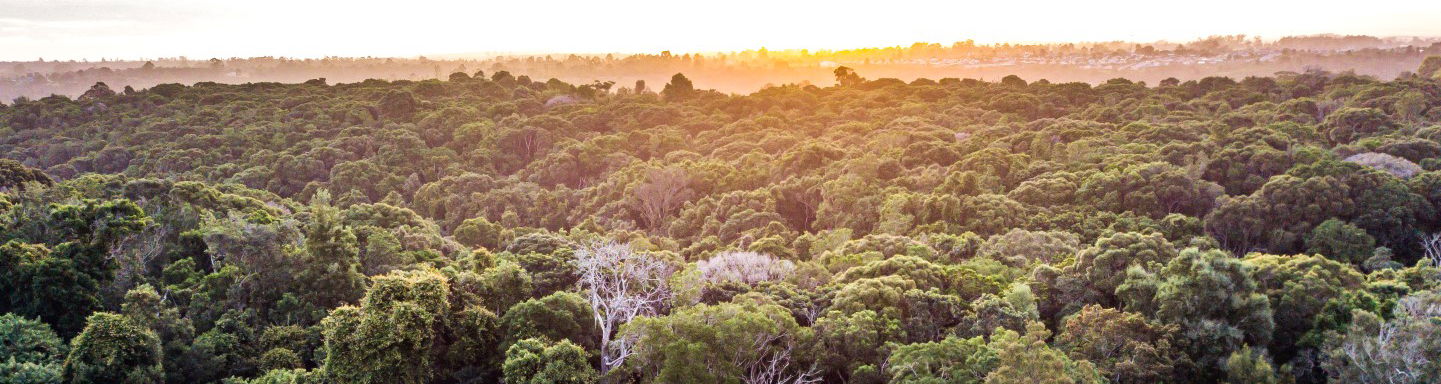
Southern Afrotemperate forests are listed as Least Concern, yet are still threatened due to their fragmented state. Most of what is left of the original southern Afrotemperate forest is currently conserved and managed as a multi-use system by SANParks, CapeNature, local and district municipalities, private nature reserves like Hebron, and conservancies. Many of the smaller forest patches around the Garden Route National Park are unprotected and are slowly being taken over by alien invasive plants, and are deteriorating.
Threats
- Fragmentation and isolation: particularly of coastal scrub forest, caused by housing and other development, i.e., commercial plantations.
- Unsustainable and uncontrolled resource harvesting of timber and non-timber products.
- Fire and a changing climate.
- Alien invasive species, such as Australian Blackwood, Bugweed and Madeira Vine.
- Polyphagous shothole borer beetle.

Hebron PNR currently has 6 cameras deployed in the forest. On these, we regularly see bushpig, bushbuck, caracal, baboons, honey badgers (our two local badgers called Jekylll and Hyde) and mongoose. We also gain insight into animal responses to humans, and despite dogs being banned from Hebron PNR, we still see stray dogs greatly affecting bushbuck behaviour.
Conservation in Action
Hebron Private Nature Reserve has been very busy lately. We have taken action to remove invasive plant species from our eastern edge, mostly grasses, and rehabilitate 1 hectare of forest ecotone. We use different treatments and compare them in order to assess the success of our venture. Forest edge rehabilitation is not well studied in South Africa, and HPNR is at the forefront of research on this topic. We do different experimental mixes of seed sowing, tree planting, leaf litter transplant and using Helichrysum petiolare (Kooigoed) as a potential nursing plant.
We have recently opened Africa’s first arboretum that celebrates the southern Cape Afromontane flora. Here, we host 75 tree species indigenous to the southern Cape forests and surrounds, along with information boards for each species. This arboretum is wheelchair-friendly and visitors can calmly walk along a wooden walk way. This allows for forest soil processes to go about unabated, by preventing soil erosion and root compaction and allowing the free movement of soil and leaf litter fauna. Visitors can walk in the shade of massive Forest Elders and Yellowwoods while learning about the different tree species in our region.
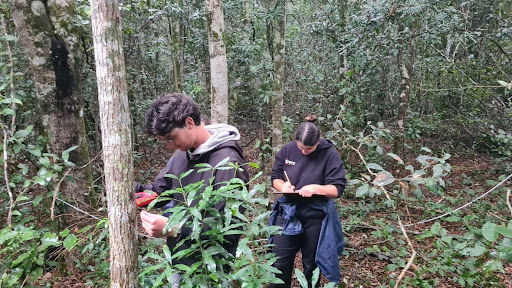 Research is a key component of our managing of Hebron PNR. This includes meticulous work on tree species composition, size classes, height, distance to nearest neighbour, seedling and sapling diversity and tree phenology.
Our research on stinkwood (Ocotea bullata) is gaining traction. We are busy documenting every stinkwood individual in HPNR, and measuring their health and size. In our reserve of 14.5 hectares, we have already documented 306 individual stinkwoods, mostly young saplings.
In HPNR, we have five demarcated monitoring plots wherein the vegetation is assessed on a continual basis. Covering 2000m² in total, we have found the dominant mature tree species in HPNR to be Real Yellowwood, Saffron, Ironwood and Kamassi. Some rarer mature tree species are Outeniqua Yellowwood, Stinkwood, Wild Gardenia and Cape Holly. HPNR boasts with 48 species of tree and large shrubs.
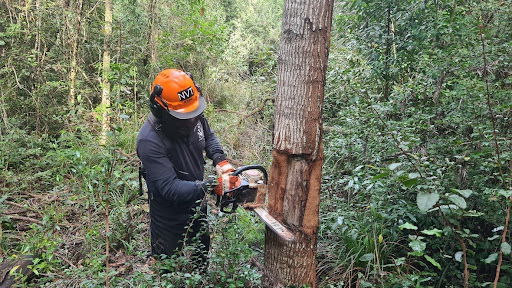
Hebron PNR has a zero-tolerance policy for invasive species. One of the methods we use is ringbarking, where we allow larger invasive trees to remain standing while dying off, by cutting off its water and nutrient transport, allowing natural forest succession to take place in its crown zone.
Current programmes running in the HPNR:
- Ecological surveys to determine vegetation diversity, health, density and size classes
- Edge rehabilitation to ensure the long-term integrity of the forest, which entails indigenous tree planting (>400 trees), seed sowing and various experimental treatments
- Research on tree-insect interactions, with a focus on seed-feeding insects affecting tree recruitment
- Research on the rare, endemic tree species Strelitzia alba, to determine its pollination and seed dispersal
- Camera traps to observe mammal diversity and behaviour
- Alien invasive species management
- Polyphagous shothole borer beetle monitoring
- Dung beetle species documentation
What you can do?
- Buy wood from the farm, and don’t bring in wood from outside, as this increases the risk of spreading the shothole borer beetle.
- Do not bring any pets, especially dogs, into the HPNR, as this affects bushbuck behavior significantly.
- Do not remove any biological matter from HPNR, including mushrooms, orchids, flowers or invertebrates.
Explore the indigenous trees of the Hebron Afromontane Forest Arboretum
Share This Page