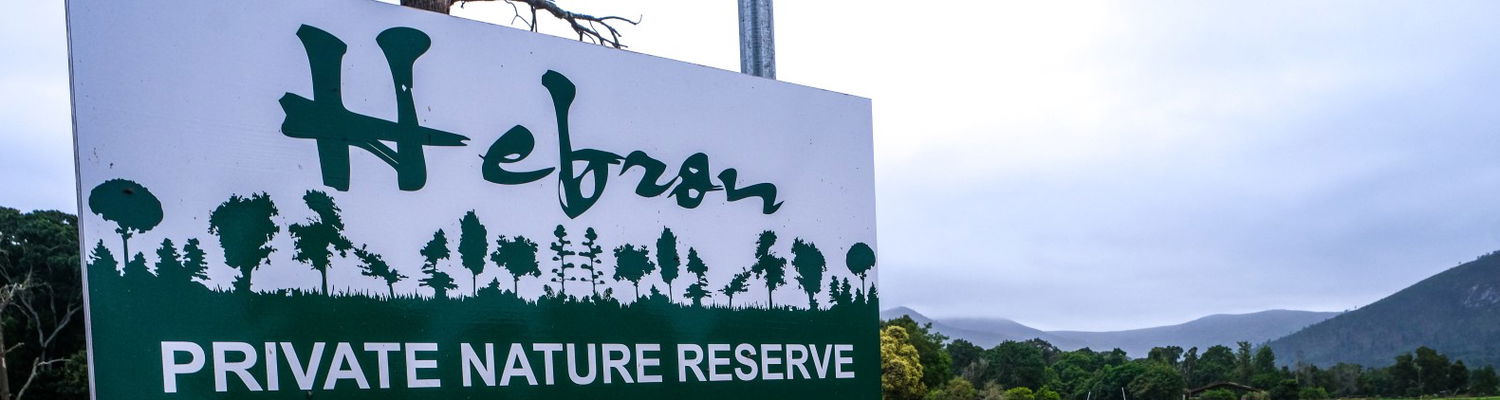
Hebron Private Nature Reserve
Hebron Private Nature Reserve (HPNR) is a 14ha, medium-moist indigenous forest of the Southern Cape Afrotemperate forests and forms part of the broader Afromontane (African Mountain) forest group which are found across the African continent at high elevations.
Hebron Private Nature Reserve is a relatively small forest, that was heavily harvested in the past by previous landowners. The current 14.5 ha forest was declared a private nature reserve in 1996.
Since then, the current owner has spent a considerable amount of funding and other resources on the rehabilitation of the reserve, which saw the removal and management of countless invasive species. This includes using scientifically sound methods to rehabilitate the forest edge back to a pristine state; aiming to mask unnatural edge effects and create a buffer against microclimatic changes nearer to forest edges.
Follow Hebron Private Nature Reserve on Facebook for updates!
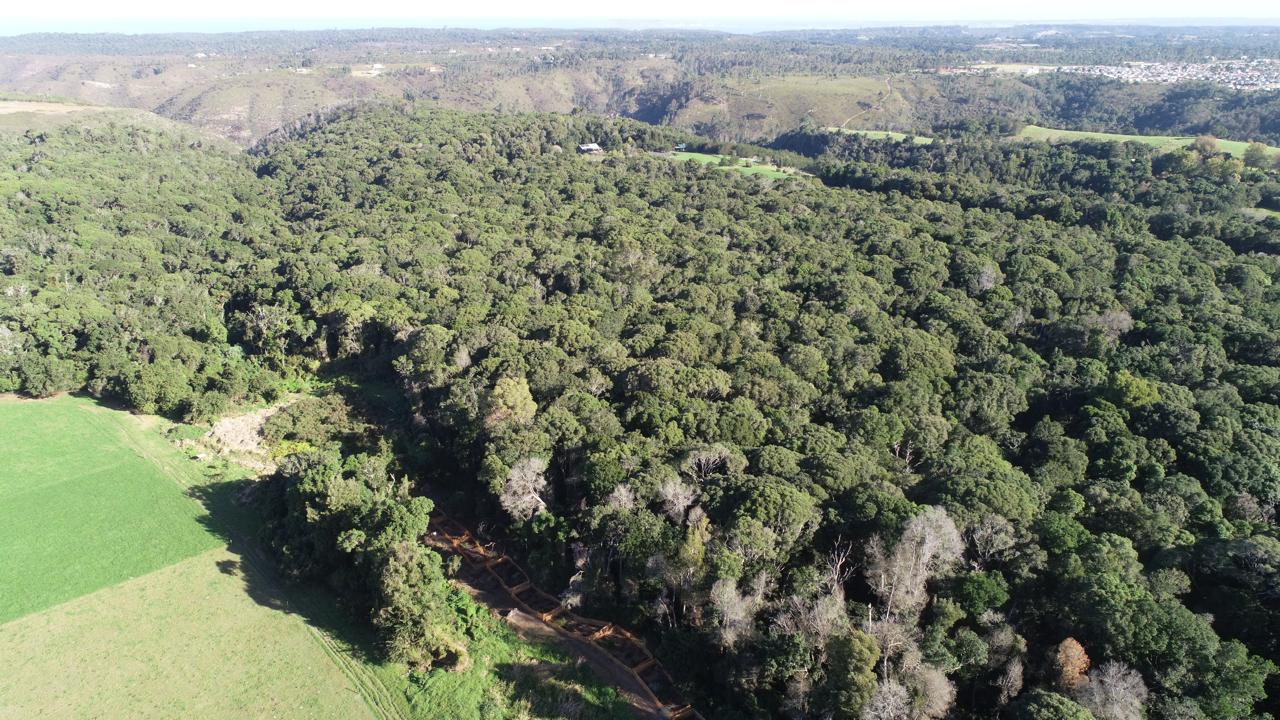
Considerable effort has also been invested in ecological research. Since 2014, more than 400 indigenous forest trees have been planted. Different treatments will be compared to optimize efforts. Removing invasive species is an ongoing endeavor, with the owners committed to the ecological integrity and protection of this unique forest.
All the properties surrounding Hebron are unfenced allowing the free movement of fauna over a large area, that extends from the Sout River in the west, to the R102 in the east, and the De Vasselot section of the Garden Route National Park in the south.
Hebron Forest Structure
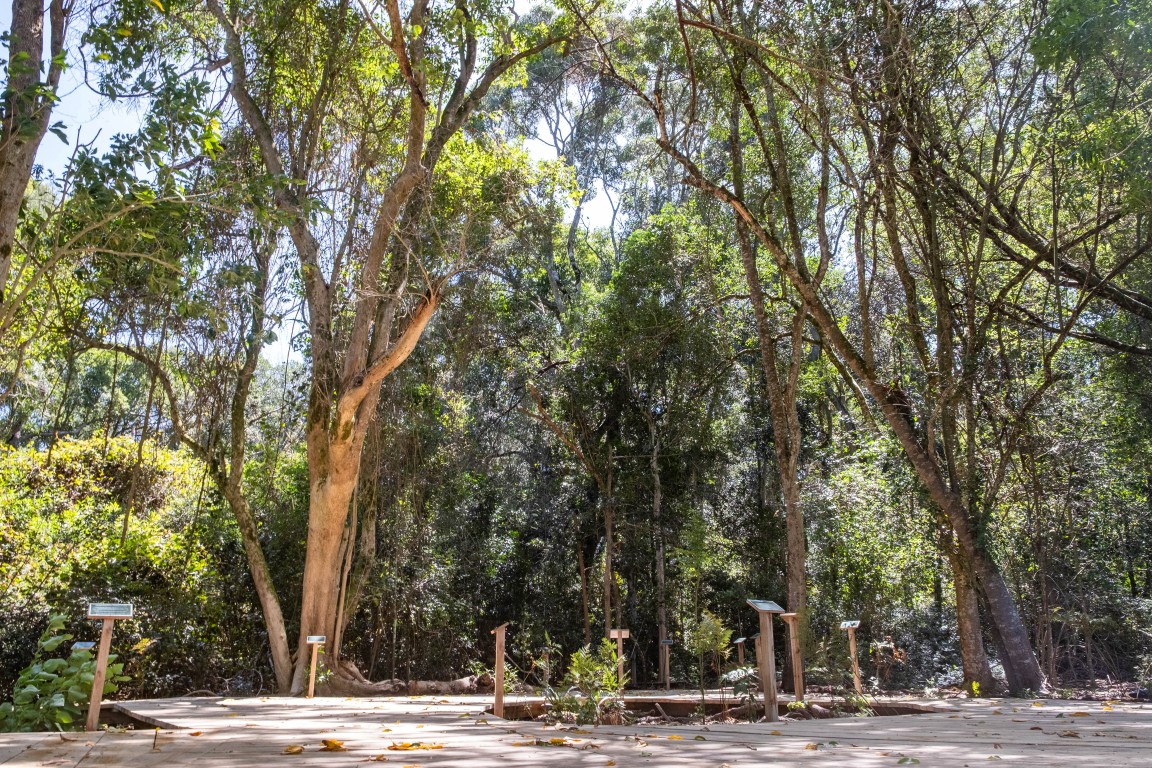 The new Hebron Afromontane Forest Arboretum showcases a wide variety of indigenous tree species found on Hebron Private Nature Reserve.
The emergent layer in HPNR (typically >22m high) is comprised of large Black ironwood (Olea capensis macrocarpa), the dominant tree species. The canopy (16 – 22m) is mainly comprised of Black ironwood, Knobwood (Zanthoxylum davyi), Real Yellowwood (Podocarpus latifolius), Hard Pear (Olinia ventosa), Forest Elder (Nuxia floribunda), Cape Saffron (Elaeodendron croceum), Candlewood (Pterocelastrus tricuspidatus) and White Pear (Apodytes dimidiata).
The intermediate storey (6 – 12m) consists of the irregularly distributed crowns of pole-stage trees of the canopy species, and of semi-mature to mature trees of a number of understory species, predominantly Kamassi (Gonioma kamassi). A dense shrub layer (3 – 5m) occurs underneath and is dominated by Black Witch Hazel, or Onderbos (Trichocladus crinitus), as well as thorny shrubs such as Num-num (Carissa bispinosa) and Cat Thorn (Scutia myrtina). The lowest layer is the herb layer, which is made up of a variety of ferns, grasses and flowering herbs, the latter notably including Gerber’s Daisy (Gerbera cordata).
Many of Hebron's endemic tree species can be viewed at the new Hebron Afromontane Forest Arboretum, the first of its kind in Africa!
Climate
The reserve experiences a moist-warm temperate climate and receives orographic rainfall of up to 1200mm per annum. Bergwinds are dry, desiccating winds that occur ahead of cold fronts, during the winter months. These winds play a major role in the landscape, not only do they push fire through the landscape, they also rid the forest canopy of dead leaves and branches.
Visit the Hebron Afromontane Forest Arboretum
Read more about Conservation Efforts at Hebron Private Nature Reserve
Share This Page